


If you're roasting a turkey this Thanksgiving, using a convection oven is one of the best ways to get crispy, golden skin and juicy, tender meat every time. The circulating hot air helps the bird cook evenly and more quickly, leaving you with a beautifully browned turkey that's never dry and done in less time than traditional roasting.
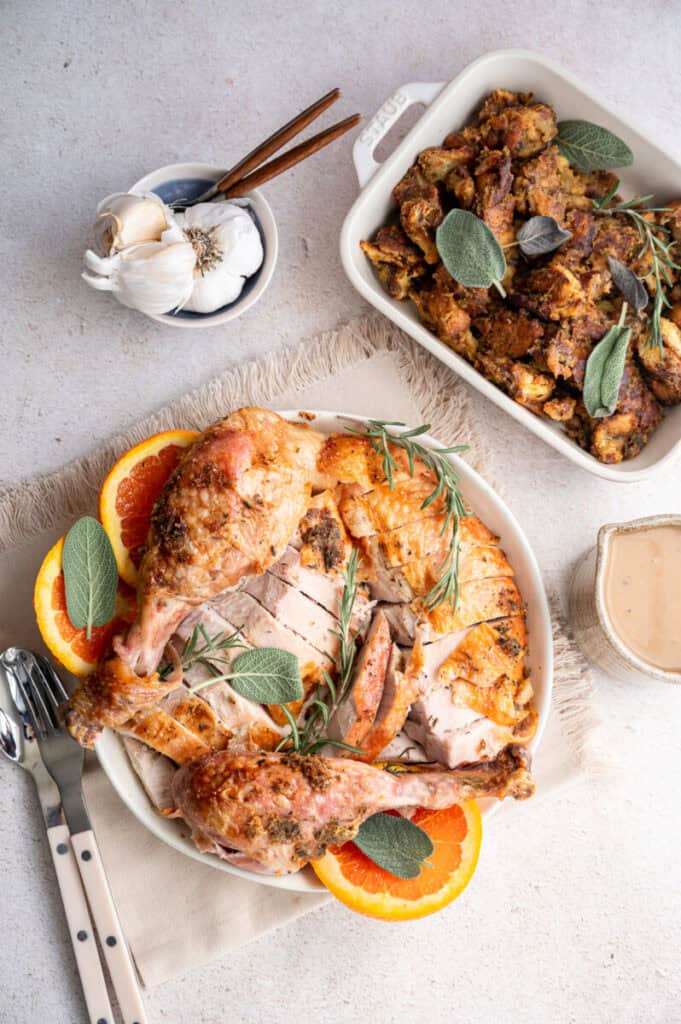
This turkey, made with fresh herbs and zesty lemon tucked inside, is flavorful, has a buttery crisp skin and is perfect for your Thanksgiving feast. It goes beautifully with your favorite Thanksgiving side dishes.
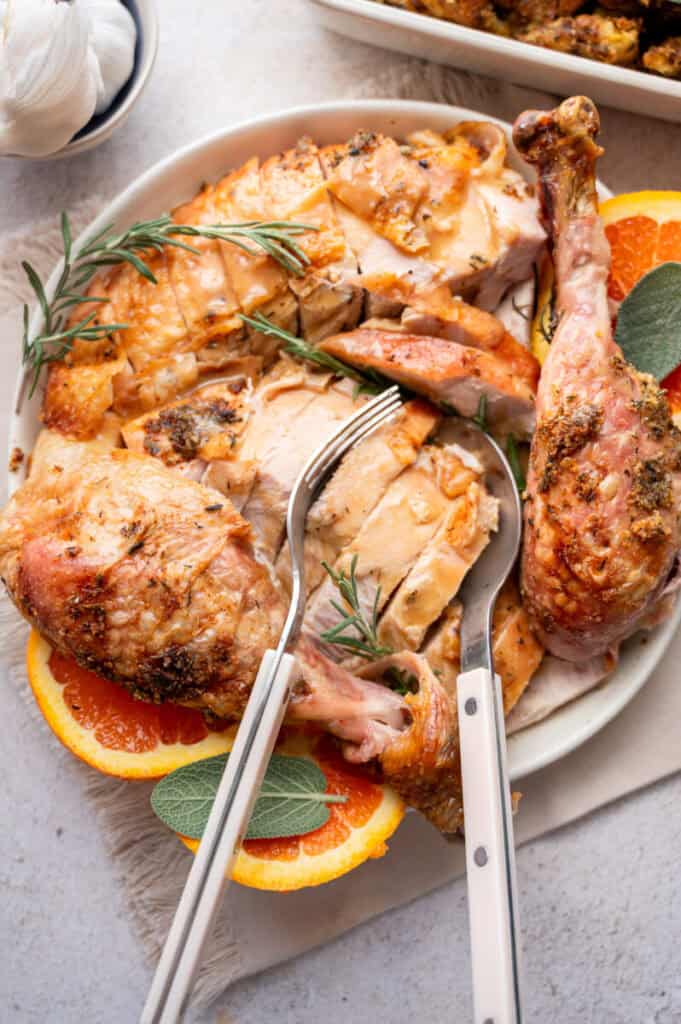
I've been roasting turkey in a convection oven for years and it's completely changed how easy and stress-free the holiday meal feels. It's truly an easy way to get perfect results every time.
This simple recipe walks you through everything from seasoning to roasting times for a whole turkey, so you can confidently serve the star of your holiday table.
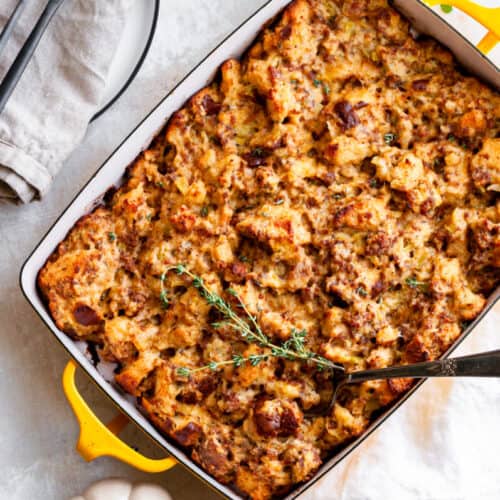
If you are looking for more Thanksgiving recipes, check out our: Brioche Stuffing, Crockpot Turkey Tenderloins or Boursin Mashed Potatoes. And pair this turkey with our Brown Gravy recipe!
Jump to:
Why We Love This Recipe
- Crispy Golden Skin: The convection oven's circulating air ensures even browning which gives you that perfectly crisp and golden skin every time.
- Juicy and flavorful: Fresh herbs, butter and lemon work together to infuse the turkey with rich flavor while keeping the meat moist and tender.
- Quick: Convection cooking reduces roasting time by about 30%, giving you a faster cooking time and a perfectly roasted turkey without sacrificing quality.
Ingredients
Here are the ingredients you will need for this perfect turkey:
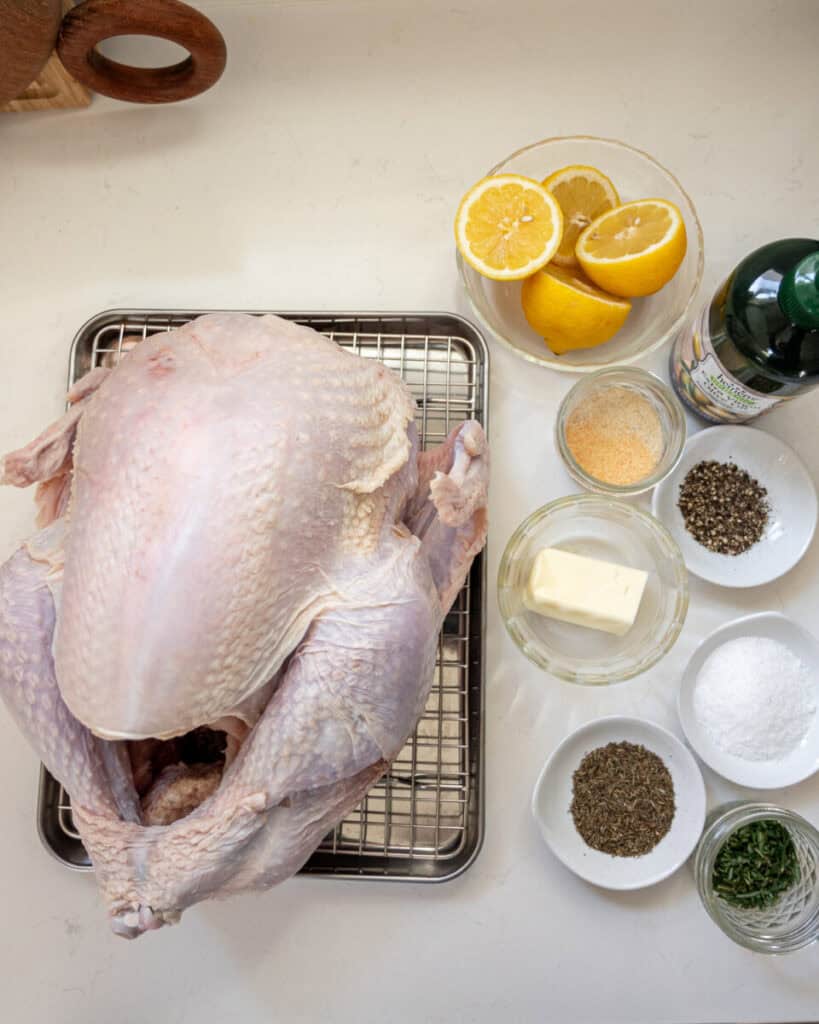
- Turkey: A 12-14 lb bird fits well in most convection ovens and cooks evenly; make sure it's completely thawed before roasting.
- Olive oil
- Butter
- Rosemary
- Thyme
- Garlic powder
- Onion powder
- Salt & black pepper
- Lemon
See recipe card below for quantities.
Thawing the Turkey
We recommend thawing your turkey in the refrigerator, but you can also thaw your turkey in cold water if needed in a pinch. See below charts for both methods.
Refrigerator Thawing
Allow 24 hours per 4-5 lbs of turkey.
| Turkey Weight | Time in Refrigerator |
| 4-12 lbs | 1-3 days |
| 12-16 lbs | 3-4 days |
| 16-20 lbs | 4-5 days |
| 20-24 lbs | 5-6 days |
Cold Water Thawing (change water every 30 minutes)
Allow 30 minutes per pound.
| Turkey Weight | Time in Cold Water |
| 4-12 lbs | 2-6 hours |
| 12-16 lbs | 6-8 hours |
| 16-20 lbs | 8-10 hours |
| 20-24 lbs | 10-12 hours |
Instructions
Let's roast this turkey together!
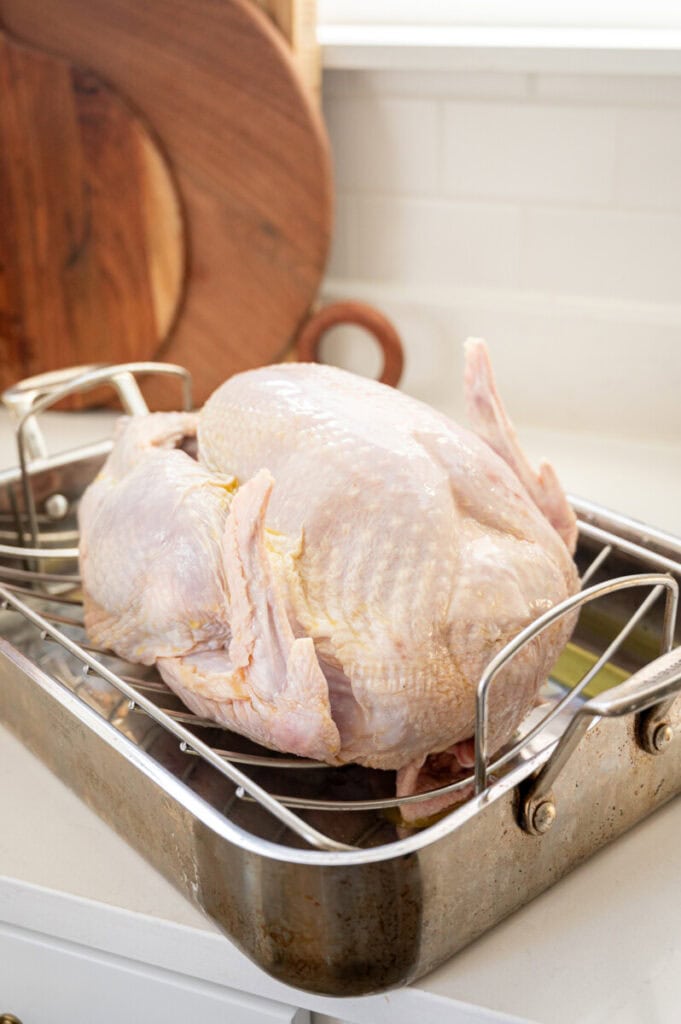
- Step 1: Set your oven to convection bake and preheat to 325°F. Pat the thawed turkey completely dry with paper towels. Brush olive oil evenly over the entire turkey, including under the bird, over the wings, and inside the cavity. Stuff lemons inside the cavity.
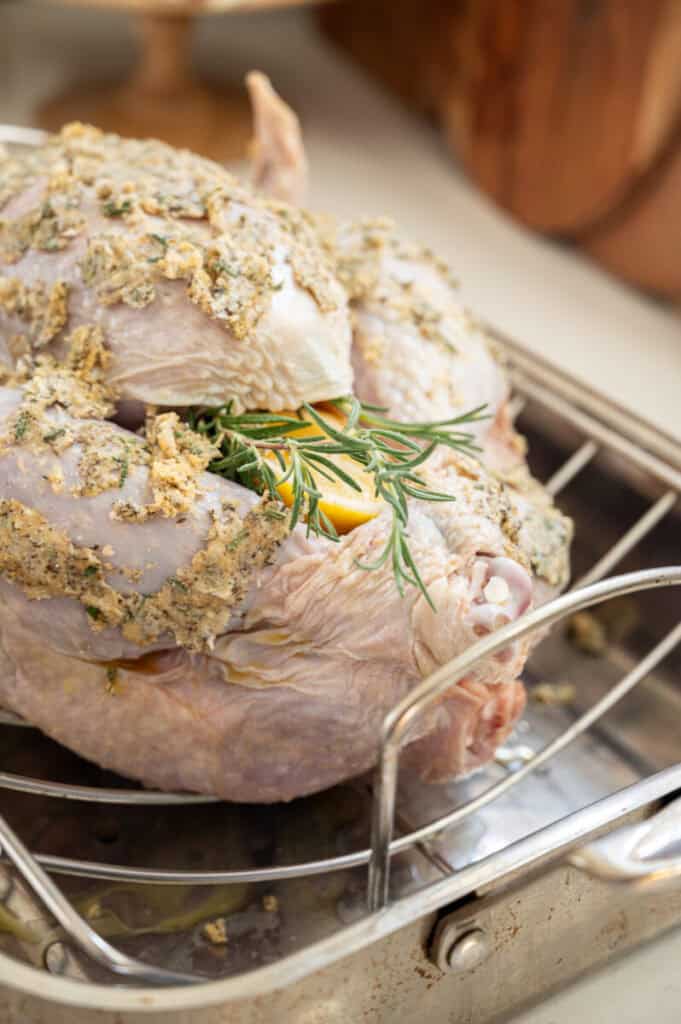
- Step 2: In a small dish, combine butter, rosemary, thyme, garlic powder, onion powder, salt, and black pepper. Rub evenly over the turkey, working some under the skin if possible.
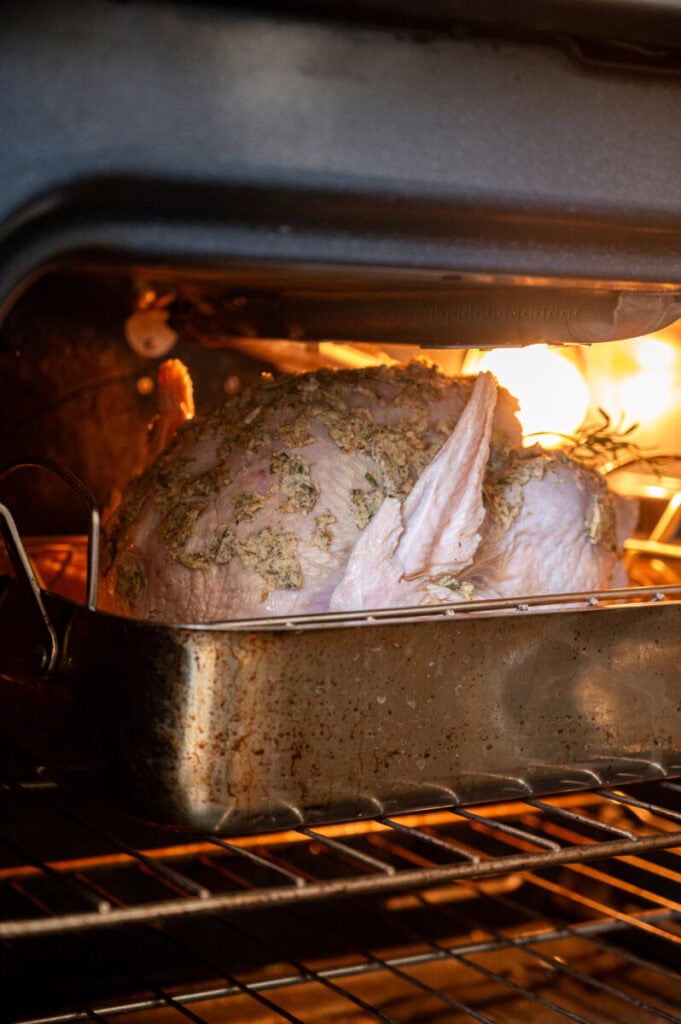
- Step 3: Tie the turkey legs together with kitchen twine and place the turkey in a roasting pan with a rack. Set on the lower oven rack of your convection oven. Roast until the thickest portion of the breast reaches 165°F and the thighs reach 175°F, using the roasting chart to estimate cooking time based on the size of the bird.
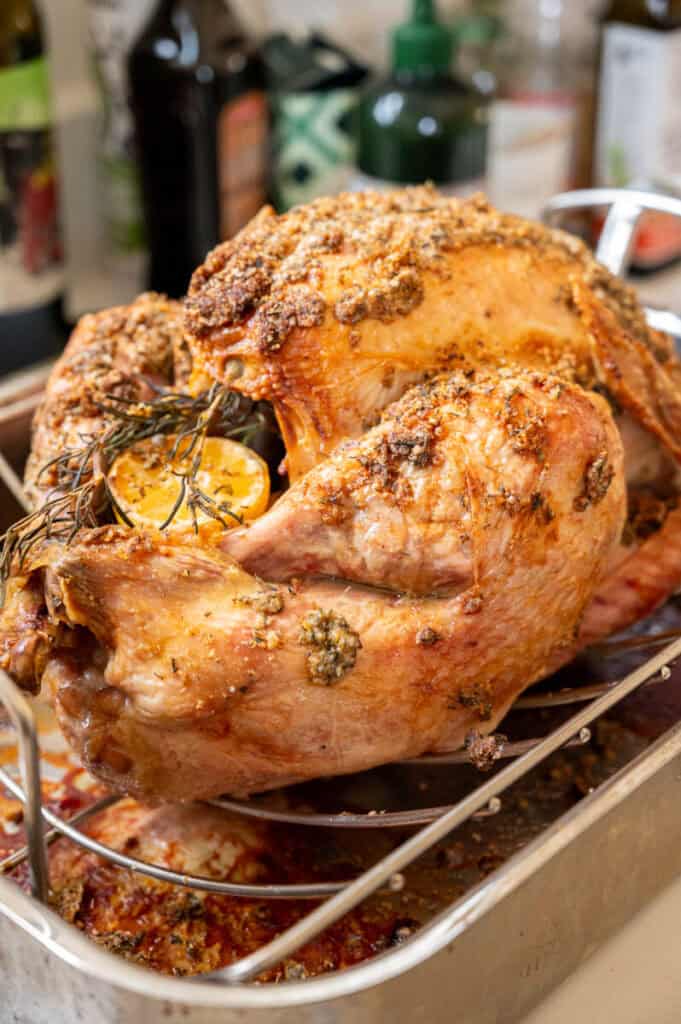
- Step 4: Remove from the oven, tent loosely with foil and let rest for at least 20-30 minutes, or up to 1 hour, before carving.
Convection Oven Turkey Roasting Times
Use this chart to estimate cooking time based on the size of your turkey. Cooking times may vary slightly depending on your oven.
| Turkey Weight | Approx. Cook Time @ 325°F |
| 8-10 lbs | 1 hr 20 min - 1 hr 40 min |
| 10-12 lbs | 1 hr 40 min - 2 hr |
| 12-14 lbs | 2 hr - 2 hr 20 min |
| 14-16 lbs | 2 hr 20 min - 2 hr 40 min |
| 16-18 lbs | 2 hr 40 min - 3 hr |
| 18-20 lbs | 3 hr - 3 hr 20 min |
| 20-22 lbs | 3 hr 20 min - 3 hr 40 min |
| 22-24 lbs | 3 hr 40 min - 4 hr |
Substitutions and Variations
Here are some common recipe substitutions and variations for this easy recipe.
- Herbs: Swap rosemary and thyme for sage, parsley or marjoram.
- Butter: Use plant-based butter or extra olive oil for a dairy-free option.
- Lemon: Replace lemons with oranges or use both for a twist. Fill the cavity with onion, garlic, fresh herbs, or carrots instead of or alongside the lemons
- Additions: Add paprika or smoked paprika to the seasonings.
Equipment
Here is some kitchen equipment you will need for this turkey recipe. You can find all of these products on Amazon.
- Deep roasting pan with rack: Elevates the turkey for even airflow and prevents soggy skin on the bottom.
- Meat thermometer: Ensures the breast and thighs reach the correct internal temperature for perfectly cooked turkey.
- Basting brush: Helps evenly coat the turkey with olive oil and herb butter.
- Kitchen twine: Used to tie the legs together for even roasting.
Storage
Here are storage and reheating instructions for this turkey:
- Refrigerator Storage: Store leftover turkey in an airtight container or wrapped tightly in foil for up to 3-4 days.
- Freezer Storage: Freeze sliced turkey in a freezer-safe container or bag for up to 3 months for best quality.
- Reheating Instructions: Reheat in the oven at 300°F with a splash of broth or gravy to keep the meat moist. For smaller portions, use the microwave in short intervals, covering the turkey with a damp paper towel to prevent it from drying out.
Top Tips
Here are some expert tips to make this roasted turkey:
- Fully thaw the turkey: A frozen center can lead to uneven cooking. Check the thawing chart for timing.
- Never thaw at room temperature: Always thaw your turkey safely in the refrigerator or in cold water (changing the water every 30 minutes). Thawing at room temperature can promote bacterial growth.
- Let the turkey rest at room temperature before cooking: Once fully thawed, take it out of the refrigerator 1-2 hours before roasting to help it cook evenly.
- Skip stuffing the turkey: For best results and food safety, cook stuffing separately. Lightly fill the cavity only with aromatics like lemon, garlic or herbs to enhance flavor and airflow.
- Use a roasting rack: This allows hot air to circulate under the bird for crisp, golden skin all around.
- Check internal temperature, not just time: The breast should reach 165°F and the thighs 175°F for a perfectly cooked turkey. Be sure to test in the thickest part of the breast.
- Rest before carving: Tent loosely with foil and rest for at least 20-30 minutes (up to 1 hour) to keep the meat tender and juicy.
FAQ
It's best not to stuff the turkey when cooking in a convection oven, as the hot air needs space to circulate for even cooking. Instead, bake your dressing separately and fill the cavity lightly with aromatics like lemon, garlic or herbs for added flavor.
You don't need to cover the turkey while it roasts in a convection oven since the circulating air helps it brown evenly. If the skin begins to darken too quickly, lightly tent it with foil toward the end of cooking.
Coating the turkey with olive oil and herb butter before roasting helps lock in moisture. Letting the turkey rest for 20-30 minutes after cooking also allows the juices to redistribute, keeping the meat tender and juicy.
No, the turkey should be completely thawed before cooking to ensure even roasting and food safety. Use the thawing chart as a guide and never thaw at room temperature.
Pairing
These are my favorite dishes to serve with this turkey recipe.





Cooking Turkey in a Convection Oven (Full Step by Step Guide!)
Ingredients
- 1 thawed turkey 12-14 lbs recommended
- ½ cup olive oil
- 4 tablespoons unsalted butter softened
- 1 tablespoons chopped fresh rosemary
- 1 tablespoon chopped fresh thyme
- 1 tablespoon garlic powder
- 1 tablespoon onion powder
- 2 teaspoons salt
- 2 teaspoons black pepper
- 2 lemons halved
Instructions
- Preheat the oven. Set your convection oven to 325°F.
- Prepare the turkey. Pat the thawed turkey completely dry with paper towels.
- Season with oil. Brush olive oil evenly over the entire turkey, including under the bird, over the wings, and inside the cavity. Stuff lemons inside the cavity.
- Make herb butter. In a small dish, combine softened butter, rosemary, salt, thyme, garlic powder, onion powder, and black pepper. Rub evenly over the turkey, working some under the skin if possible.
- Truss the legs. Tie the turkey legs together with kitchen twine, then transfer the turkey to a roasting pan with a rack.
- Roast the turkey. Place in the oven and roast until the thickest portion of the breast reaches 165°F and the thighs reach 175°F. Use the roasting chart to estimate cooking time based on turkey size.
- Rest before carving. Remove turkey from the oven, tent loosely with foil, and let rest for at least 20-30 minutes (up to 1 hour) before carving.
Notes
Tips/Notes:
- Fully thaw the turkey: A frozen center can lead to uneven cooking. Check the thawing chart for timing.
- See blog post cooking chart for specific cooking times for turkeys of various sizes.
- Never thaw at room temperature: Always thaw your turkey safely in the refrigerator or in cold water (changing the water every 30 minutes). Thawing at room temperature can promote bacterial growth.
- Let the turkey rest at room temperature before cooking: Once fully thawed, take it out of the refrigerator 1-2 hours before roasting to help it cook evenly.
- Skip stuffing the turkey: For best results and food safety, cook stuffing separately. Lightly fill the cavity only with aromatics like lemon, garlic or herbs to enhance flavor and airflow.
- Use a roasting rack: This allows hot air to circulate under the bird for crisp, golden skin all around.
- Check internal temperature, not just time: The breast should reach 165°F and the thighs 175°F for a perfectly cooked turkey. Be sure to test in the thickest part of the breast.
- Rest before carving: Tent loosely with foil and rest for at least 20-30 minutes (up to 1 hour) to keep the meat tender and juicy.
Did You Make This Recipe?
Leave a comment below or tag us @tasting.with.tina on Instagram!




Leave a Reply