
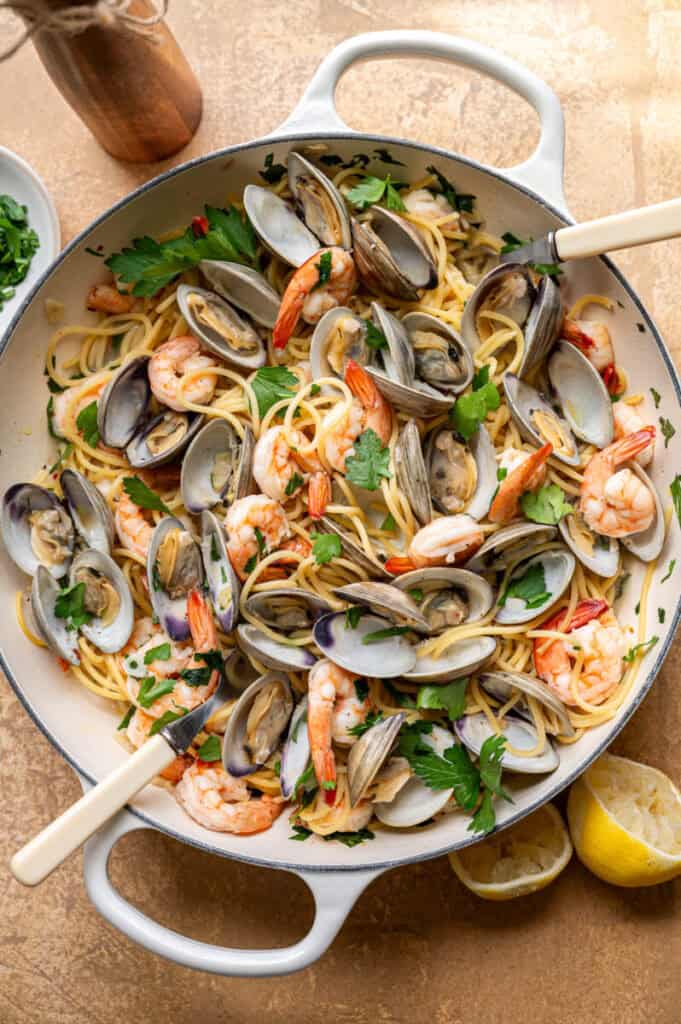
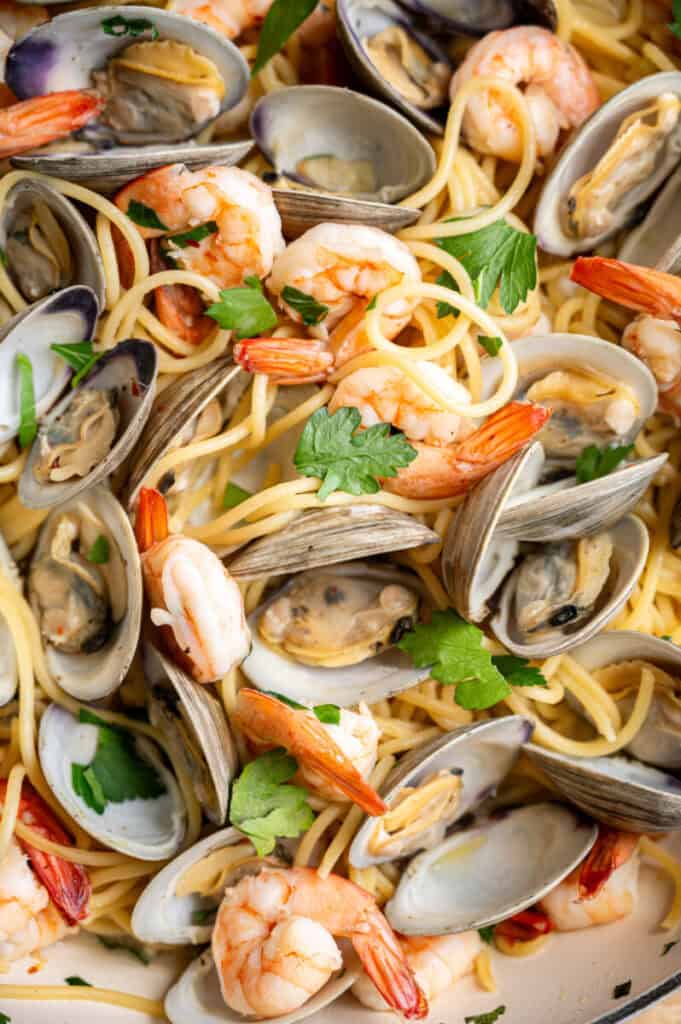
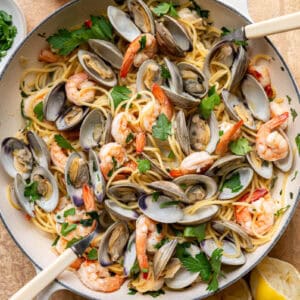
Fresh clams and shrimp make an ordinary pasta night feel like dinner at your favorite Italian restaurant, but this clam and shrimp pasta is surprisingly simple to make at home. Tender linguine is tossed with littleneck clams, juicy shrimp and a light garlic white wine sauce finished with butter, lemon and plenty of fresh parsley.
As a cookbook author and professional recipe developer, I love recipes that feel special without requiring complicated techniques or a long ingredient list. This seafood pasta is exactly that. The clams create their own naturally briny cooking liquid, while white wine, garlic and lemon build a flavorful sauce that coats every strand of pasta.
It's elegant enough for date night or entertaining, but easy enough to make whenever you're craving a really good seafood pasta.
If you love pasta recipes, try my Shrimp Luciano, White Wine Pasta Sauce or Easy Shrimp Pasta next.
Jump to:
Why We Love This Recipe
- Restaurant-quality flavor: Fresh clams, shrimp, garlic and white wine create a pasta that tastes special without relying on a heavy sauce.
- Simple ingredients: The ingredient list is short and lets the seafood really shine.
- Light but satisfying: There is no cream in this seafood pasta. Butter, olive oil and starchy pasta water create a glossy sauce that's rich enough without feeling heavy.
- Perfect for entertaining: Clams in their shells make a beautiful presentation, especially served in a large shallow bowl with lemon wedges and fresh parsley.
- Easy to customize: Add more red pepper flakes for heat or finish the pasta with extra olive oil and lemon.
How to Clean Fresh Clams
Cleaning the clams properly is one of the most important steps in this recipe.
- Sort the clams first. Look through the clams and discard any with cracked or badly damaged shells.
- Check any open shells. If a clam is slightly open before cooking, gently tap it against the counter or another clam. A live clam should close. Discard any that remain open.
- Rinse under cold water. Place the clams in a colander and rinse them thoroughly under cold running water.
- Scrub the shells. Use a stiff vegetable brush to scrub away any sand, mud or debris on the exterior of the shells.
FDA seafood guidance recommends buying live clams with closed shells and discarding shellfish that don't close when tapped. After cooking, clams that remain closed should also be discarded.
Do You Need to Soak Clams?
For most commercially farmed littleneck clams, a thorough rinse and scrub is often enough. If your fishmonger specifically recommends purging the clams because they're particularly sandy, follow their handling instructions.
Ingredients
Here are the ingredients you will need to make clam and shrimp pasta:
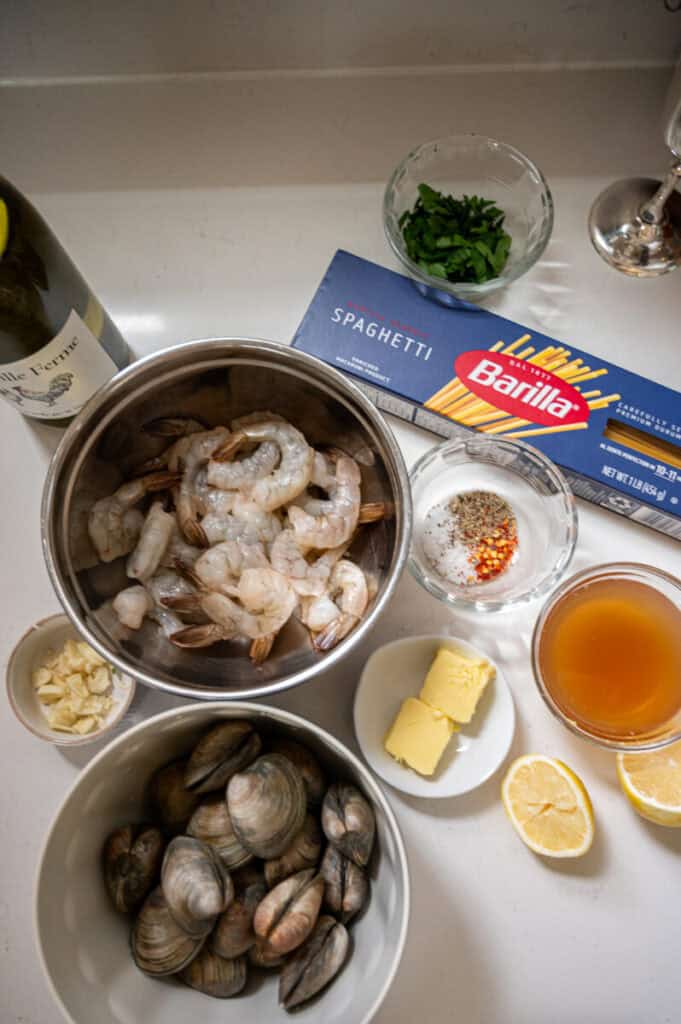
- Linguine or spaghetti: Both pair beautifully in the white wine sauce.
- Littleneck clams: Fresh littleneck clams are small, tender and ideal for pasta. Clean them well before cooking.
- Large shrimp: Use peeled and deveined shrimp so they're easy to eat with the pasta.
- Extra virgin olive oil: Forms the base of the sauce and helps cook the garlic.
- Unsalted butter: Butter gives the finished sauce a silky texture. Using unsalted butter also gives you more control over seasoning since clams naturally add salt.
- Garlic: Fresh minced garlic is essential to the simple white wine sauce.
- Red pepper flakes: Optional, but a small amount adds subtle heat.
- Dry white wine: Use a crisp, dry wine such as Pinot Grigio or Sauvignon Blanc.
- Chicken broth: Adds a little extra body and savory flavor to the sauce.
- Salt: Use lightly and adjust at the end because the clams can release quite a bit of salt into the sauce.
- Black pepper: Adds mild warmth without competing with the seafood.
- Lemon: Both zest and juice brighten the garlic and white wine sauce.
- Italian parsley: Fresh parsley adds color and freshness to the finished dish.
- Pasta water: Starchy pasta water helps emulsify the sauce so it clings to the linguine rather than pooling at the bottom of the pan.
How to Make Clam and Shrimp Pasta
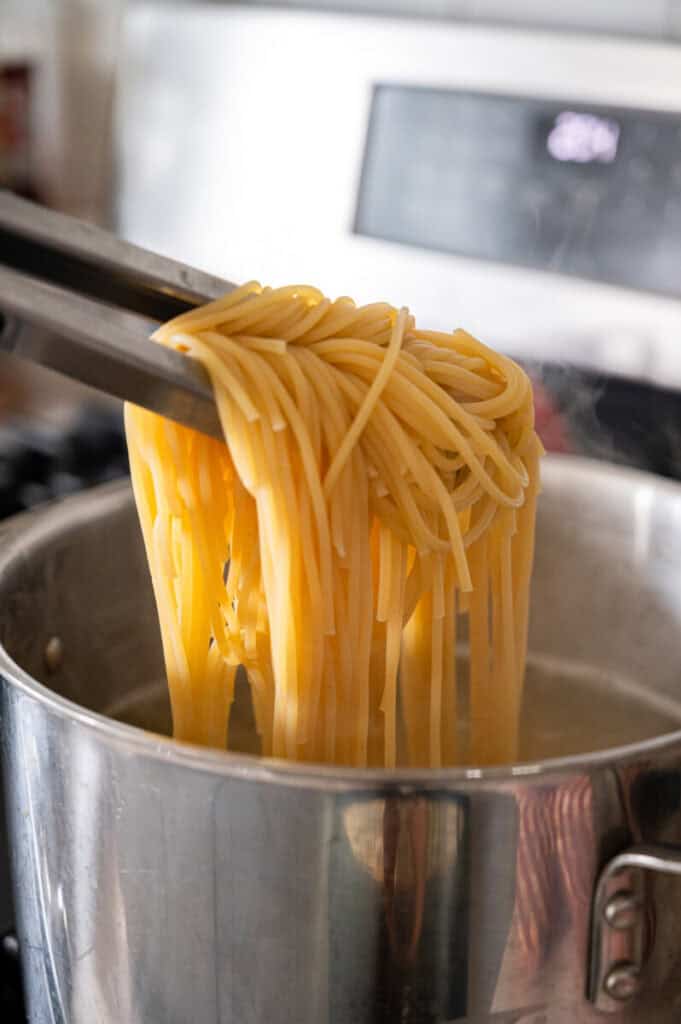
Cook the pasta
Bring a large pot of salted water to a boil. Cook the linguine until just shy of al dente according to package directions. Reserve 1 cup of pasta water, then drain.
Start the sauce
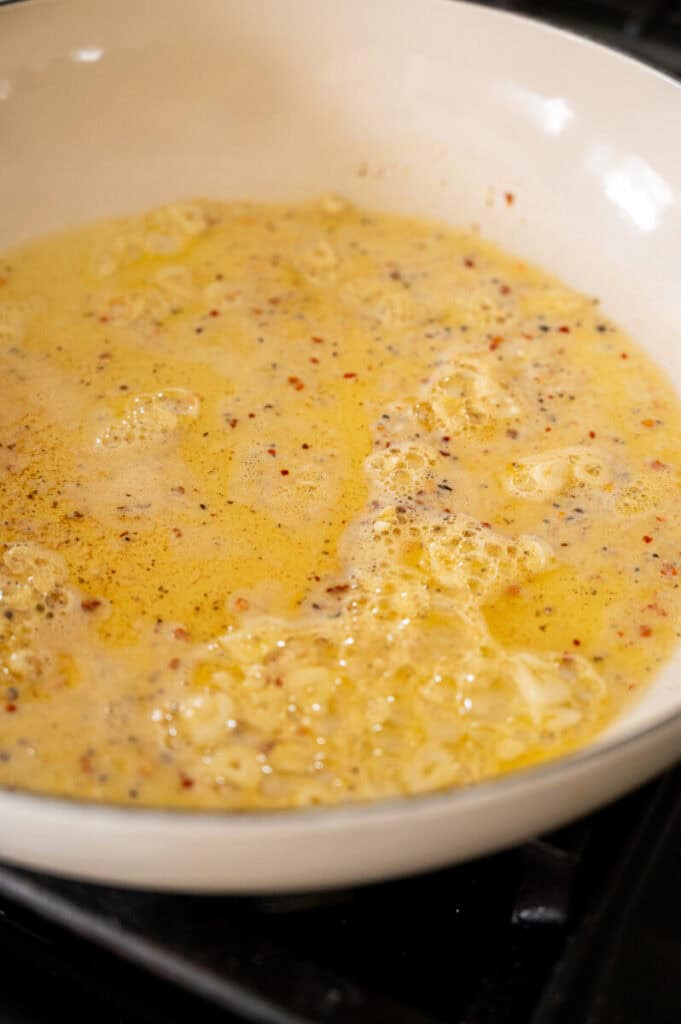
While the pasta cooks, heat the olive oil and 1 tablespoon butter in a large skillet or Dutch oven over medium heat. Add the garlic and red pepper flakes and cook for about 30 seconds, stirring frequently, until fragrant.
Steam the clams
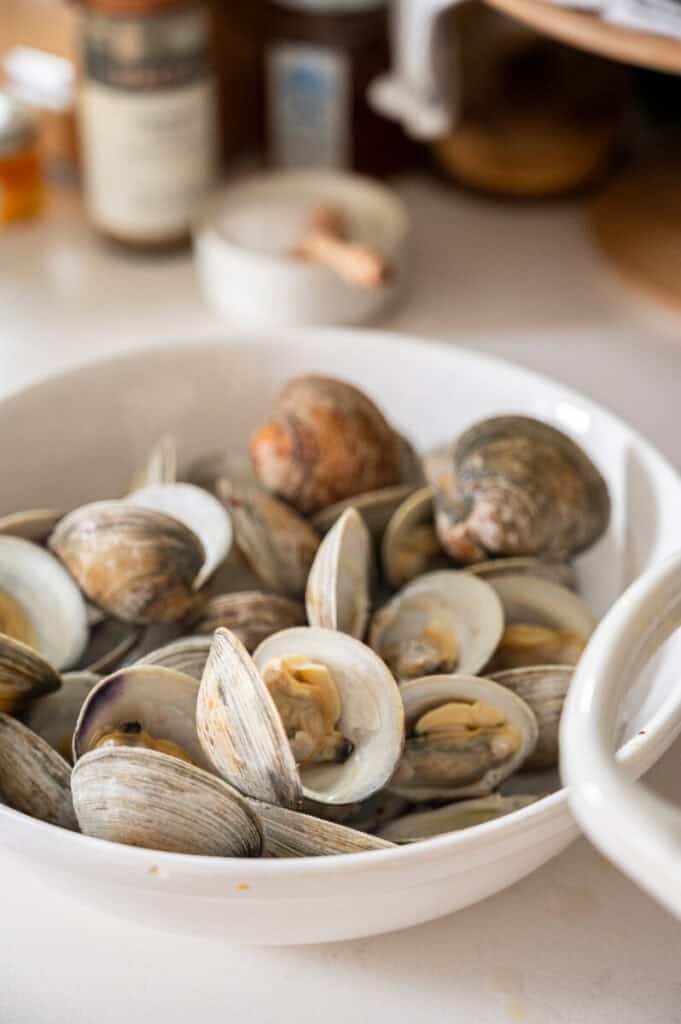
Add the white wine, chicken broth and black pepper. Bring to a gentle simmer, then add the clams. Cover and cook for 5-7 minutes, checking occasionally and transferring the clams to a bowl as they open. Discard any clams that do not open. Add the shrimp to the skillet and cook for 2 to 3 minutes, stirring occasionally, until pink and almost cooked through.
Finish the pasta
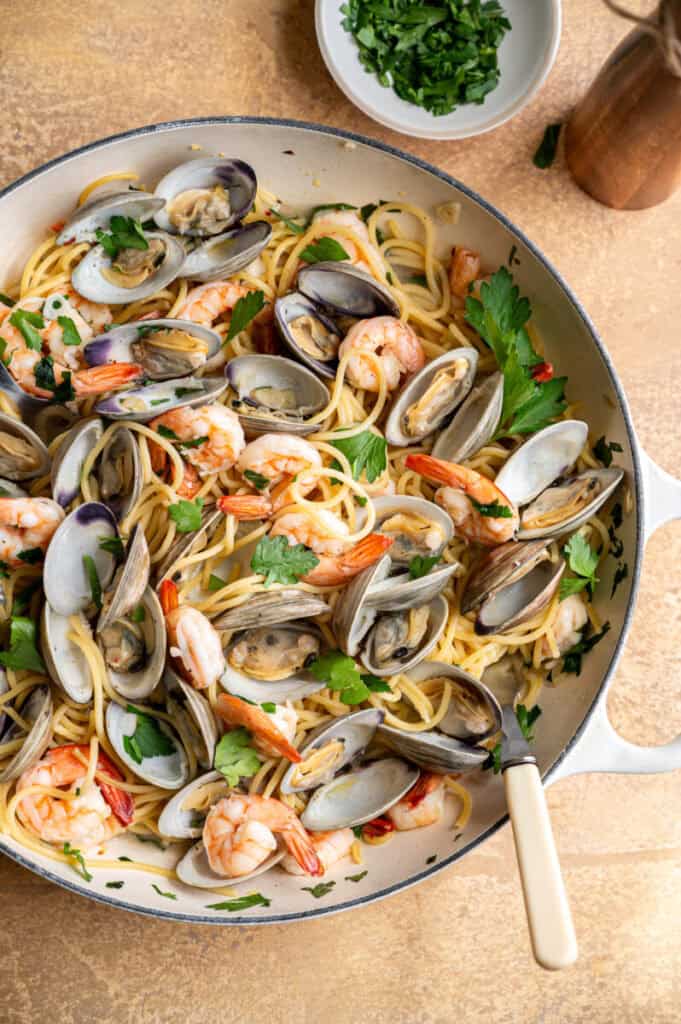
Add the drained pasta, lemon zest, lemon juice, remaining tablespoon of butter and Italian parsley. Toss everything together for 1 to 2 minutes, adding reserved pasta water as needed, a little at a time, until the sauce is glossy and coats the pasta. Return the clams to the skillet and gently toss to combine. Taste and adjust the seasoning as needed. Serve immediately with additional parsley and fresh lemon wedges.
Tina's Tips and Tricks
- Remove the clams as they open: Don't wait for every clam to open before removing the first ones. Transferring them to a bowl as they're ready prevents them from overcooking and becoming chewy.
- Undercook the pasta slightly: The linguine will finish cooking in the skillet with the sauce, so drain it when it's just shy of al dente.
- Reserve plenty of pasta water: You may not need the entire cup, but having extra gives you control over the final consistency.
- Add pasta water gradually: Start with a small splash and toss thoroughly before adding more. You want a glossy sauce that coats the pasta, not a watery one.
- Don't overcook the shrimp: Add the pasta once the shrimp are just about cooked. They will continue cooking for another minute or two while everything is tossed together.
- Use a wide skillet: You'll need enough room for 2 pounds of clams to steam and for the pasta to be tossed comfortably at the end.
Kitchen Equipment
You don't need any specialized seafood equipment for this recipe.
- Large pot: For boiling the linguine.
- Large deep skillet or Dutch oven: Use a pan with a lid so the clams can steam.
- Colander: For draining the pasta and rinsing the clams.
- Stiff vegetable brush: Helpful for scrubbing the clam shells.
- Tongs: Make it easy to toss the linguine in the sauce.
Substitutions and Variations
- Pasta: Linguine and spaghetti are my favorite, but bucatini or fettuccine can also work.
- Clams: Littleneck clams are ideal because they're small and tender, but other small hard-shell clams can be substituted depending on what's available at your seafood counter.
- Broth: Seafood stock can be substituted for the chicken broth for a more pronounced seafood flavor.
- Make it spicy: Increase the red pepper flakes to ½ teaspoon or more depending on your preference.
- Extra lemon: Finish each bowl with a squeeze of fresh lemon juice for an even brighter flavor.
- More garlic: If you love garlicky seafood pasta, add another clove or two.
- Finish with olive oil: A drizzle of good extra virgin olive oil just before serving gives the pasta an extra silky finish.
What to Serve With Clam and Shrimp Pasta
This clam and shrimp pasta is substantial enough to serve as the main course, so I like keeping the rest of the meal simple.
Serve it with crusty Italian bread for soaking up the garlic and white wine sauce left in the bowl.
A simple arugula salad, Caesar salad or roasted broccoli would also balance the pasta nicely.
For an Italian-inspired seafood dinner, you could start with Baked Clams Oreganata or bruschetta and serve the pasta as the main course.


Frequently Asked Questions
Yes. Replace the ½ cup white wine with additional chicken or seafood broth. You may want to add a little extra lemon juice at the end to replace some of the acidity from the wine.
Clams can become rubbery if they're overcooked. Removing each clam as it opens lets the slower clams continue steaming without overcooking the rest.
I wouldn't add Parmesan to this particular recipe. The light garlic, lemon and white wine sauce lets the flavor of the fresh seafood stand out.
Storage and Reheating
- Refrigerator: Store leftover clam and shrimp pasta in an airtight container in the refrigerator and enjoy it promptly.
- Reheating: Gently warm leftovers in a skillet over low to medium-low heat with a splash of chicken broth or water. Avoid cooking it for too long, which can make both the shrimp and clams tough.
- Freezing: I don't recommend freezing this pasta. Both the shellfish and pasta will have the best texture when freshly cooked.

Clam and Shrimp Pasta
Ingredients
- 12 ounces linguine or spaghetti
- 2 pounds littleneck clams scrubbed and cleaned
- 1 pound large shrimp peeled and deveined
- 2 tablespoons extra virgin olive oil
- 2 tablespoons unsalted butter divided
- 4 garlic cloves minced
- ¼ teaspoon red pepper flakes optional
- ½ cup dry white wine
- ½ cup chicken broth
- ½ teaspoon salt
- ¼ teaspoon black pepper
- 1 lemon zested
- 2 tablespoons fresh lemon juice
- ⅓ cup chopped fresh Italian parsley
- ½ cup reserved pasta water as needed
Instructions
- Cook the pasta: Bring a large pot of salted water to a boil. Cook the pasta until just shy of al dente according to package directions. Reserve 1 cup of pasta water, then drain.
- Start the sauce: While the pasta cooks, heat the olive oil and 1 tablespoon butter in a large skillet or Dutch oven over medium heat. Add the garlic and red pepper flakes and cook for about 30 seconds, until fragrant.
- Steam the clams: Add the white wine, chicken broth, salt, and black pepper. Bring to a gentle simmer, then add the clams. Cover and cook for 5-7 minutes, checking occasionally and transferring the clams to a bowl as they open. Discard any clams that do not open.
- Cook the shrimp: Add the shrimp to the skillet and cook for 2-3 minutes, stirring occasionally, until just pink and almost cooked through.
- Finish the pasta: Add the drained pasta, lemon zest, lemon juice, remaining tablespoon of butter and Italian parsley to the skillet. Toss everything together for 1-2 minutes, adding reserved pasta water a little at a time until the sauce is glossy and coats the pasta.
- Serve: Return the clams to the skillet and gently toss to combine. Taste and season with kosher salt if needed. Serve immediately with additional parsley and lemon wedges.
Notes
- Cleaning the clams: Rinse the clams well under cold running water and scrub the shells with a stiff brush. Discard any cracked clams. If a clam is open before cooking, gently tap it on the counter. If it does not close, discard it.
- White wine: Use a dry white wine you enjoy drinking, such as Pinot Grigio or Sauvignon Blanc.
- Don't overcook the seafood: Remove the clams as soon as they open and cook the shrimp only until pink and opaque. Both can become tough if cooked too long.
- Optional variation: Add an extra pinch of red pepper flakes for more heat or finish with an additional drizzle of extra virgin olive oil before serving.
Did You Make This Recipe?
Leave a comment below or tag us @tasting.with.tina on Instagram!
Leave a Reply